

5 Start-up Myths Everyone Should Know

In this blog we’ll look into myths around start-ups and debunk them using the list from Data Driven VC written by Andre Retterath and Jérôme Jaggi. Learning about what to do and what not to do when it comes to building a successful business. You’ll learn a lot about where to start, the skills or knowledge you might need and practical insight from studies.
Myth 1: Silicon Valley Is the Best Place to Build a Start-up
Silicon Valley is a powerhouse, but it’s not the only place to succeed. The advantages of Silicon Valley are of course the unmatched access to VC funding, top talent, and a strong innovation culture. Even bigger cons to take into account are sky-high costs of living and operating that make it incredibly tough for early-stage start-ups. Other emerging hubs you might want to look into that are thriving cities like Austin, Tel Aviv, and Berlin. Especially if you are in industries like DeepTech, Healthcare, MedTech, and Defense, Silicon Valley might not be the best fit. This first myth is all about the importance of the location: you should choose a start-up hub that aligns with your industry, resources, and long-term vision.
Myth 2: Founders Need VC Funding to Succeed
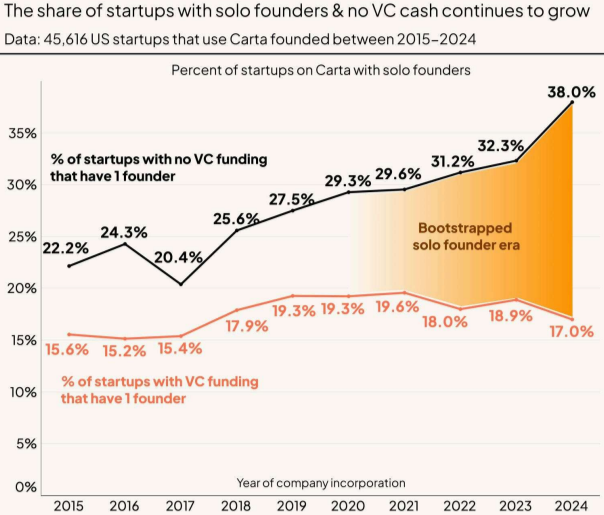
The second myth is all about the funding. Even though VC funding can easily help fuel rapid scaling, it’s not the only way to build a successful start-up. VC also might include something outside of capital: it may come with capital, mentorship, and growth acceleration. But with a certain trade-off of course, high amounts of money go hand in hand with high expectations for billion-dollar exits. Essentially, this means a loss of control for founders. The reality of it is that more founders are skipping VC – in 2015 only 22.2% of solo-founders were built without VC. That number reached a whopping 38% in 2024! Alternatives that were used are for example: bootstrapping, angel investing, and crowdfunding offer more flexibility and control. This shows that there is not one way to reach the top, founders should evaluate their goals carefully – VC funding might not be the best fit. Consider other ways to balance growth, control, and sustainability.
Myth 3: You Must Be Technical to Start a Tech Start-up
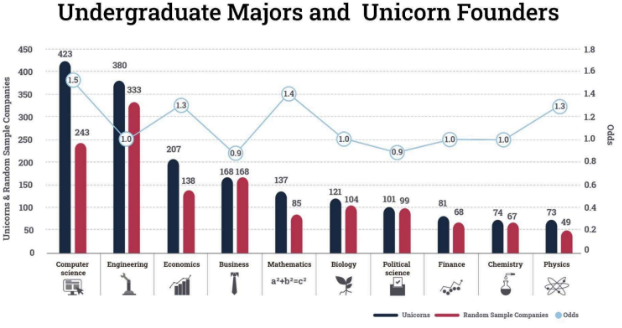
The third myth is all about the skills and knowledge that the founders bring to the table. This might a shock, but not all successful founders have technical backgrounds. What matters more is strong business acumen, leadership, and communication, or building the right team (by looking for technical co-founders or development-partners. Another important skill is leveraging low-code and AI tools which simplify building MVPs. Professor Strebulaev estimates in his post that over ⅓ of unicorn founders have non-technical backgrounds—yet they’ve all successfully built and scaled tech start-ups. What matters more than a pure technical expertise is a mix of vision, leadership, and adaptability.
Myth 4: Rapid Scaling Should Always Be the Priority
Experiencing a great momentum and constant growth is obviously great, but scaling too fast can possibly backfire due to unforeseeable things like operational breakdowns, where you grow too quickly without solid infrastructures, leading to quality issues. Or expanding before achieving product-market fit which results in wasted resources, in case of market misalignment. The statistics show even top SaaS companies that grew 94% in Q1 of 2021 slowed down to 66% by Q2 2023. Their median growth rates dropped from 46% to 25% in the same period. This shows that smart scaling means balancing momentum with sustainability – you shouldn’t prioritize speed at the expense of long-term success.

Myth 5: The Best Product Always Wins
The last myth is about what you’re selling a customer: a great product definitely helps, but it’s not enough to guarantee success. An important variable is timing, even the best product can flop if launched at the wrong time. Another ‘must’ is brand strength, a trusted brand builds loyalty, credibility, and long-term value. Success also depended on agility. The data shows start-ups that best adapt to market needs and competitors have the upper hand.
Some advice:
A strong brand paired with a solid network gives you a competitive advantage. Execution often matters more than innovation—breakthrough products still need effective strategies and operational efficiency to scale successfully.
Related content
You may be interested in this articles too
