

Essential Insights on AI Talent

A recent Start-up Genome report sheds some light on the global race for AI expertise. Below we’ll look deeper into the AI start-up climate to look for the best starting ground between the U.S. and Europe. The first noticeable difference between AI start-ups in these two areas is the growth rates.
-
US vs Europe: AI companies growth rates
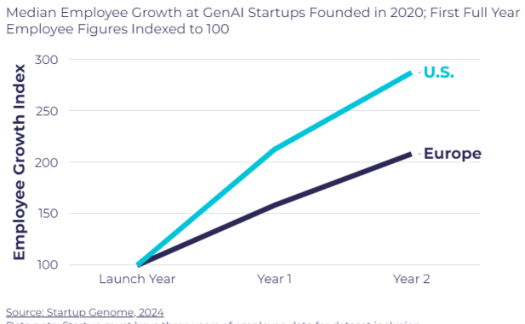
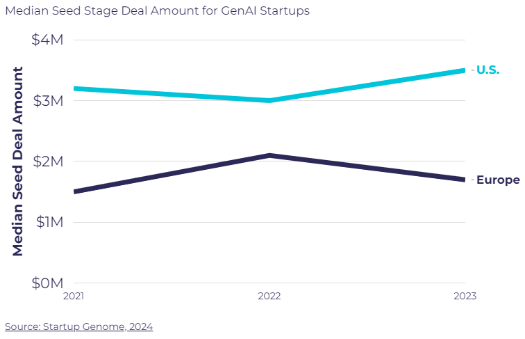
Employee Growth and Seed Funding for U.S. vs. Europe show striking differences. U.S. GenAI start-ups experience a 40% higher employee growth rate from launch to year two compared to European ones. This gap extends to funding as well, with U.S. start-ups raising nearly $4 million in median seed deals, while European start-ups average around $2 million. Another contrast in AI companies is the employee benefits in regard to their AI talent.
-
US vs Europe: Compensating AI talent
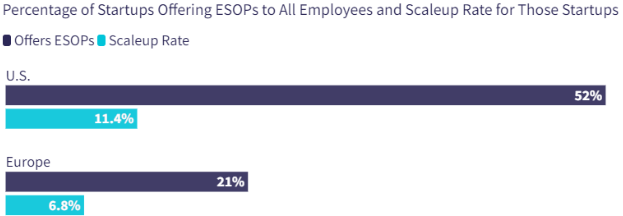
Data show how compensation packages for AI talent are much stronger in the US, with 52% of US start-ups offering Employee Stock Ownership Plan (ESOP) compared to 21% in Europe. ESOP is a form of compensation by which employees receive stocks of the companies they work for. Ultimately, employees can enjoy the benefits of an eventual corporate (partial) sale by selling their shares. ESOP are one main source of talent attraction for start-ups, and Europe is seemingly lagging behind.
Relatedly, a major attraction of talent in the US translates into higher scaleups (companies reaching $50M valuation after 4 years from founding), with 11.4% of US start-ups reaching that level vs 6.8% of European ones. Keep on reading to understand what the underlying reason for this delay in AI start-up success in Europe might be.
-
Europe’s Challenges in the AI Race
European start-ups face significant hurdles, including weaker funding or compensation to attract AI talent as compared to other geographies. The fragmented market, with diverse regulations and cultures complicate start-up’s scaling efforts too. Several policy initiatives advocate for increased efforts in this technology (e.g., see the Draghi report). Results are yet to come. And for those thirsty for more AI news, don’t miss out this reflection on the new EU AI Act, which will likely shape how Europeans access and use such technology.
Related content
You may be interested in this articles too
