

Should Start-ups Avoid Tech Clusters?

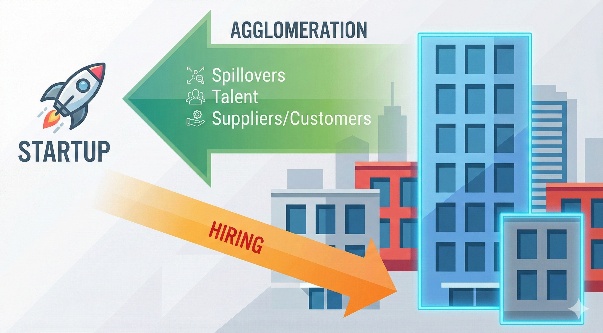
This blog reviews an article from the Harvard Business Review that tackles a tough question: Is it really worth it for start-ups to base themselves in tech clusters alongside large firms? Many start-ups choose to set up shop in “tech clusters” to access a rich pool of skilled workers. These areas, often populated by large firms, offer developed labor markets for technical, sales, and managerial staff. But there’s a catch: competing with big companies for talent can significantly drive-up salary costs, leaving start-ups with less capital for other key initiatives like experimentation and marketing.
Findings
A recent study analyzed more than 180 million job ads posted between 2010 and 2020, including data from 140,000 U.S. start-ups. The findings show that when large firms ramp up their hiring, start-ups in the same area have to increase wages by up to 10% to attract talent. This, in turn, can reduce their growth rate by 36% compared to start-ups that don’t face the same competition.
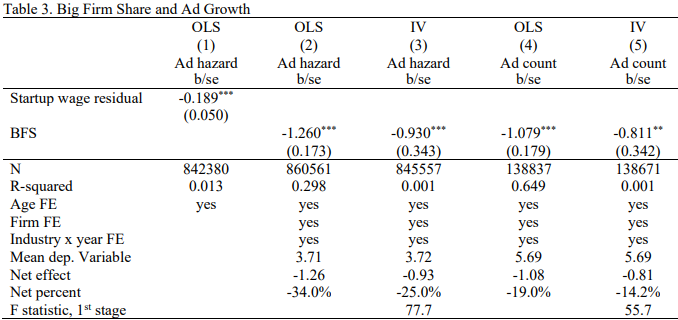
The data shows that when large companies in an area are doing a lot of hiring, it becomes harder for start-ups to grow their teams. The next scenario will predict as to what happens when the share of hiring by big firms in the local job market goes up: firstly, start-ups are less likely to advertise jobs at all. As a moderate increase in big firm hiring is linked to about a 1.3 percentage point drop in the chance a start-up even posts its first job ad. And secondly, even for start-ups that do start hiring, they tend to post one fewer ad per year on average. The bottom line is when big companies are hiring aggressively in a local area, start-ups are more likely to stay quiet. As shown before, they post fewer job ads and consequently probably hire fewer people. The competition for talent is just too steep. But is that the biggest threat?
Surprisingly, large firms with similar business models to start-ups cause less damage to growth (an estimated reduction of 20%), compared to dissimilar firms (what can lead to a reduction of up to 60%). This may be because similar companies offer spillover benefits, like idea sharing and entrepreneurial spawning. In regard to recruiting for talent, the following is recommended: (1) Start-ups should critically assess the talent landscape before choosing a location. (2) If the start-up is moving to a dense tech cluster, they should emphasize internal advancement opportunities and build a strong employer brand to compete without solely relying on high salaries. (3) Alternative ways such as remote work and recruiting from non-traditional backgrounds can also help overcome the talent squeeze. (4) A start-up should consider regional policies that support growth specifically for start-ups, like areas that limit non-compete agreements to enhance employee mobility.
Related content
You may be interested in this articles too
